NEXT-BUILDINGS (2012-2017)
NEXT-Buildings, zero-energy buildings that don’t cost the earth
OBJECTIVE
- To build pioneering energy-efficient buildings on a large scale
Budget
NEXT-Buildings received support from the European research and innovation program FP7 (now replaced by Horizon 2020) of up to €3 million, with €700,000 of funding for Lyon Confluence.
TEAM
THREE PILOT CITIES
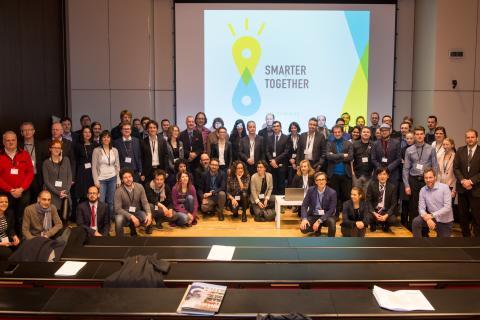
The NEXT-Buildings consortium featured three European cities:
- Amsterdam (the Netherlands)
- Helsingborg (Sweden)
- Lyon (France)
THE LYON TEAM
- Lyon Confluence
- Bouygues Immobilier
- Hespul, an association specialised in the development of renewable energy and energy efficiency
IMPLEMENTATION
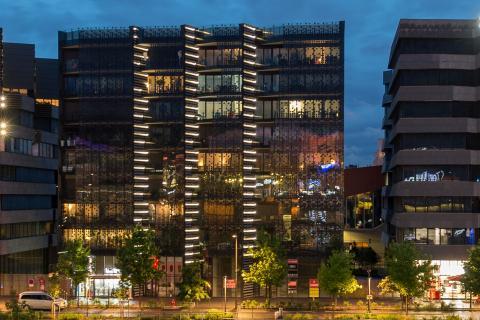
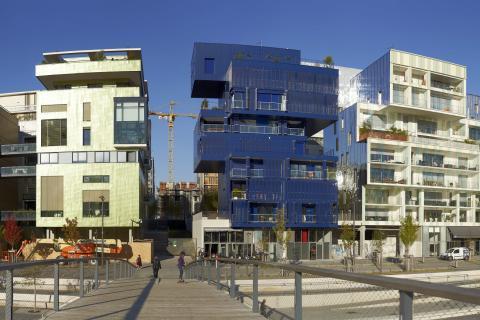
The European programme NEXT-Buildings was involved in the creation of the first “energy-plus” housing block in La Confluence, Hikari, which means “light” in Japanese. Here are some of its features:
- the 12,000 m2 mixed-use block (offices, housing, shops) is composed of three buildings, which makes it possible to smooth out energy consumption between the various kinds of uses and save energy:
- Minami (housing),
- Higashi (offices),
- Nishi (offices & housing),
- shops and community spaces spread across the three buildings,
- bioclimatic architectural design with high environmental quality,,
- renewable energy production for heating and electricity in the block,
- sensors that adapt the building’s lighting and heating according to the weather or the presence of users,
- storage of heat and electricity in the block.
Hikari’s energy system
Renewable energy is produced by the solar panel roof and facade, a rapeseed oil cogeneration power plant and geothermal technology.
Hikari by Bouygues Immobilier and Kengo Kuma, CBR Architecture
Hikari par Bouygues Immobilier et Kengo Kuma, CBR architectures


BENEFITS
- Hikari’s energy consumption is 50 to 60% less than traditional buildings.
- Its renewable energy production is:
- local, produced in the urban environment,
- equivalent to the block’s consumption.