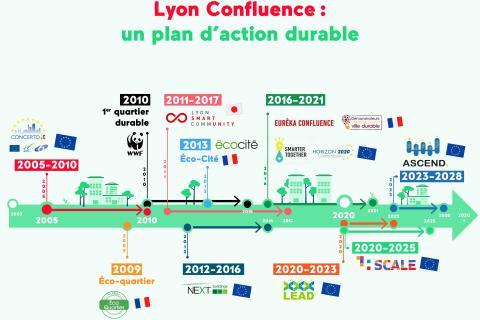
CONCERTO (2005 - 2010)
CONCERTO (2005-2010), A FIRST EUROPEAN RECOGNITION
Objectives
- Reduce energy consumption
- Develop renewable energy production
CONCERTO was a programme of the European Commission which aimed to promote exemplary solutions for the reduction of energy consumption and the production of renewable energy in a defined urban area.
Team
Three committed players
- Lyon (France): construction of three high energy performance blocks in La Confluence quarter as part of the Renaissance program,
- Saragossa (Spain): construction of bioclimatic buildings in the eco-city Valdesparterra and thermal renovation of the El Picarral district.
- Lombardy (Italy): is observing the solutions put in place by Lyon and Saragossa in order to replicate them.
L’équipe lyonnaise
- La Métropole de Lyon
- Lyon Confluence
- Hespul : association specialising in the development of renewable energies and energy efficiency
- ALEC (Agence Locale de l'Energie et du Climat de la Métropole de Lyon): metropolitan agency and energy information centre
- Enertech : design office specialising in the energy performance of buildings
- INSA CETHIL (Lyon Energy and Thermal Centre): INSA Lyon university research centre
Implementation
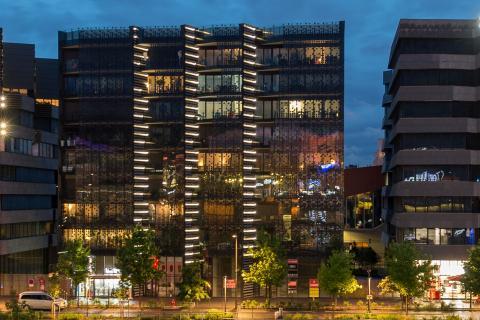
CONCERTO-Renaissance focused on blocks A, B and C of the first phase of the Lyon Confluence urban project.
Saône Park by Nexity Apollonia


Lyon Islands by Marignan Alliade


Le Monolithe by ING Real Estate Atemi


Benefits
Reduction of the energy consumption of buildings
- Bioclimatic design (southern exposure of dwellings to maximise natural light, dual-aspect dwellings to facilitate natural ventilation, etc.),
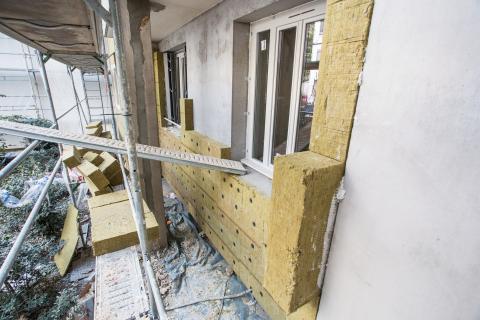
- Technical innovations (a ventilation system adapted to the climate and use, insulation from the outside and high-performance windows).
This design improves thermal comfort for occupants of the buildings and allows for energy consumption 40% lower than that of conventional buildings (according to the French thermal regulations of the time, RT 2005).
Assessing the performance of buildings once they have been delivered
Sensors have been installed in some homes. During the first year, sensors collected data on energy flows (climatic conditions, insulation performance, etc.) in order to understand the real performance of the buildings. A monitoring system for solar power installations has been set up to check the performance of the solar panels, detect any anomalies and retrieve data.
Improving renewable energy production
80% of the hot water and heating needs and 50% of the electricity requirements of the common areas are covered by renewable energy sources:
- 3 automatic wood boilers distributed in the blocks with a cumulative output of 2 MW,
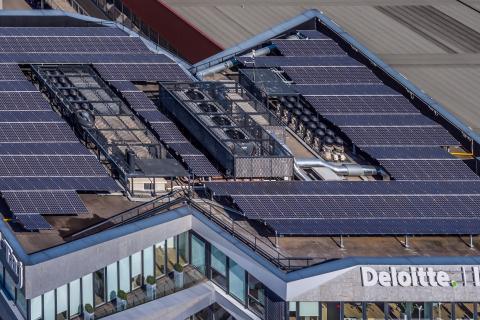
- 490 m2 of solar panels with a production capacity of 273 kWp.
Broad social and functional diversity of the blocks
- 16,000 m2 of office space,
- 61,000 m2 of housing, i.e. more than 600 housing units, including:
- 44% high-end housing,
- 33% standard housing,
- 23% social housing.
This commitment to diversity contributes to a pleasant and lively living environment thanks to the mix of housing and offices.
Information meetings and training
Objective : adoption of efficient behaviour and reduce energy consumption and energy bills.